
I thought my heart was stopping.
Reading time: 2 min

One night I woke up gasping for air with a sharp jolt in my chest.
I thought: “That’s it.”
I dialled 999 with shaking hands.
At A&E they told me: “Sounds like anxiety.”
I went home more scared than before.
If you’ve ever stared at the ceiling at 3am thinking “what if I stop breathing?” — this is for you.
A night that feels like a threat
I went to bed watching my pulse on my watch.
I also checked my blood oxygen.
If the numbers dropped, my mind went straight to the worst-case scenario.
I opened my phone and read news and forums non-stop.
Everything I read scared me more.
I tried mouth tape, apps, and breathing exercises.
The next day, the panic came back.
Two nights in a row not wanting to sleep for fear of repeating it.
Sleeping sitting up on the sofa “just in case”.
Waking up with tingling in my arm and a wrecked neck.
I stopped going to the gym. I was late for work.
One day I found myself crying in the shower.
I told myself: “I can’t carry on like this.”
A calm friend. One sentence that changed everything
I rang James, my calmest mate.
He said, no drama:
“You’re not mad. Your airway narrows when your jaw drops back. There’s a gentle way to bring it slightly forward.”
I asked him to explain it clearly.
“When you fall asleep, your muscles relax. Your lower jaw and tongue slide a little backwards. That narrows your throat. The soft tissue flutters. That flutter sends a danger signal to your brain. You get a jolt and your sleep gets ripped away. It wasn’t your heart; it was your airway.”
That was the missing piece.
It wasn’t my nose. It was right at the back of my throat.
Since then I call it: “The Throat Flutter Alarm.”
The problem
Almost everyone knows snoring is air moving.
What almost nobody knows is where and what triggers it:
Night-time drift: the jaw and tongue move a few millimetres backwards.
- The throat becomes narrow.
- The tissue flutters unevenly.
- The body reads that flutter as danger — and jolts you awake.
That’s why earplugs don’t help… and you can still wake up with a shock.
The problem isn’t just the noise. It’s the unpredictable spike that feels like a warning to your heart.
The solution
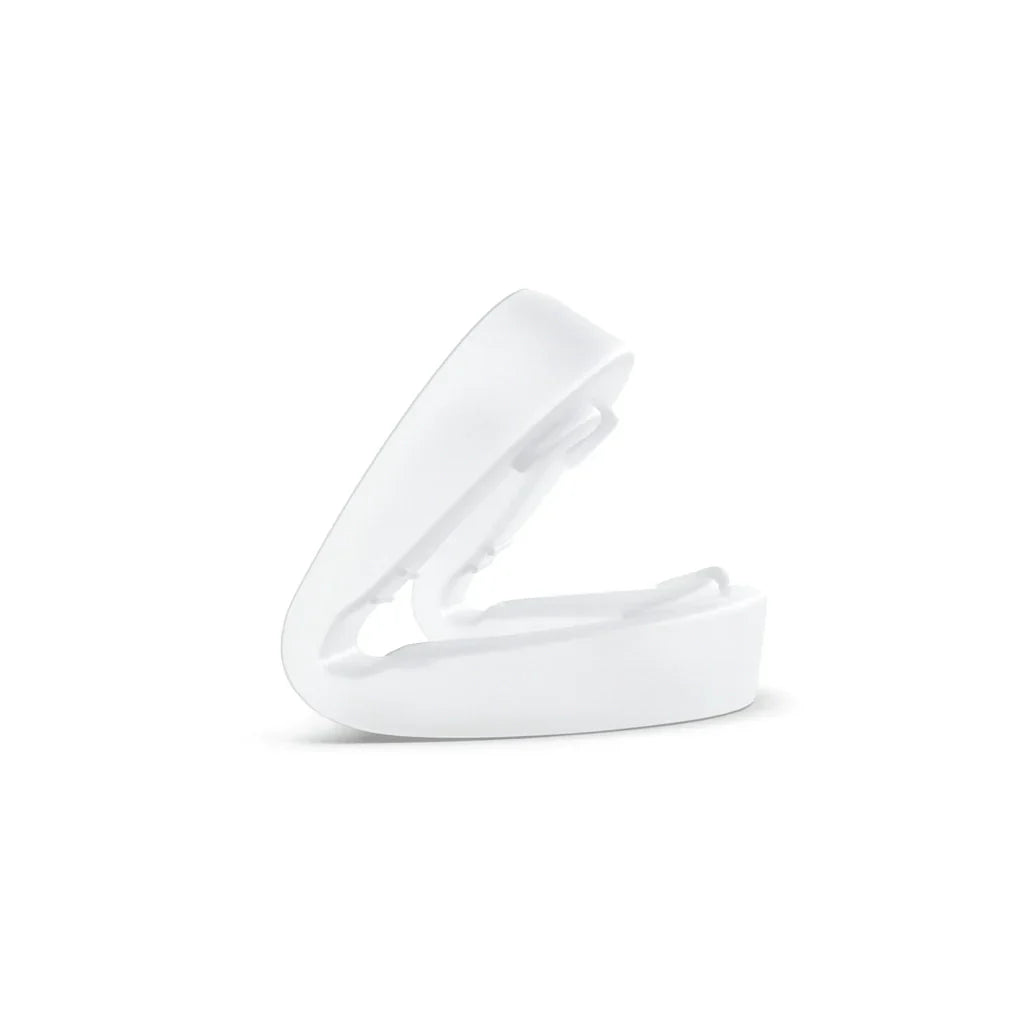
James told me about AirRest™.
“It makes a very gentle micro-adjustment. It keeps the jaw slightly forward. That way the airway doesn’t narrow. The tissue doesn’t flutter.”
No flutter = no danger signal. And if your brain doesn’t receive danger, there’s no panic.
I liked that it doesn’t force anything; it adjusts little by little.
He explained a simple plan of two or three nights to find the “quiet spot” without discomfort.
That same day I ordered AirRest™.
A real test at home
It arrived on a Friday. I adjusted it in five minutes.
A soft fit, with a comfortable hinge. I could talk and swallow before sleep.
Night 1
I went to bed nervous.
At midnight: calm, even breathing.
I woke up at 3:14 out of habit, not from a shock.
I didn’t check my pulse. I went back to sleep.
Night 2
I added one more tiny adjustment.
No jolts. I woke up at 6:02.
In my notes: “Slept 6h 21m. Woke up calm.”
Night 3
No sofa. No “just in case”.
I wrote: “I slept earlier. I didn’t check my pulse.”
The following week was my first in months with 6–7 hour blocks.
I went back to the gym. I stopped being scared of the night.
Why this works and the other stuff didn’t
Mouth tape: can irritate and doesn’t stop the drift.
Number apps: don’t switch off the alarm.
Earplugs / white noise: block sound, not the spike.
Sleeping upright: reduces jaw drop a bit, but wrecks your neck and rest.
AirRest™ targets the cause.
It gave me predictable silence.
Predictable = safe.
And when your body feels safe, you finally sleep.
What is AirRest™ Predictable Silence
A gentle, adjustable micro-advance to find your quiet spot.
A comfortable hinge: you can speak and take a sip before sleep.
Set it at home in minutes.
Small and easy to clean, with a discreet case.
Designed for simple snoring and “shock wake-ups”.
Who is it for?
- Anyone who snores and gets scared at night.
- Anyone checking their pulse at 3am.
- Anyone avoiding lying down because of fear.
How I started (and what I suggest)
“Three Calm Nights” list
Night 1: minimum setting. Go to bed as normal.
Night 2: add one step if you still notice spikes or jolts.
Night 3: keep the setting where your room stays quiet and calm.
Note: time you fall asleep, wake-ups, and how you wake up.
Rinse in the morning. Repeat.
It gave me something simple — and huge: going to bed without fear.


AirRest™ 2025 | Anti-Snoring and Anti-Sleep Apnea Mouthpiece (Offer)
AirRest™ 2025 | Anti-Snoring and Anti-Sleep Apnea Mouthpiece (Offer)
🔇 Say goodbye to snoring: uninterrupted sleep.
💑 Better nights together: peace, quiet, and rest.
✨ Guaranteed comfort: fits easily and comfortably.
BUNDLE & SAVE
Couldn't load pickup availability



Dr Charles Walker: Consultant in Sleep Medicine (London)
Every day I see how snoring steals hours of life and ruins the peace at home.
After testing AirRest™, my verdict is clear: for cases of mild to moderate snoring without underlying disease, it marks a before and after.
Its design quietly but effectively opens the airway, stabilises the flow of air and removes the vibration in the tissues that causes that unbearable noise.
Within days — and in some patients from the very first night — I’ve seen a dramatic drop in snoring, fewer micro-awakenings and people waking with more energy, plus that tangible quiet that leads to better mood and easier relationships at home.
It’s a change you can feel and be grateful for.
FREQUENTLY ASKED QUESTIONS
Will I really notice a change from the very first night?
Will I really notice a change from the very first night?
In many cases, yes: by gently opening the airways you reduce vibration and micro-awakenings, which often means your snoring becomes much quieter or even disappears.
Is it comfortable or will it bother me when I sleep?
Is it comfortable or will it bother me when I sleep?
AirRest™ is designed to be discreet and ergonomic. After 2–3 nights of adjustment, most people say they “hardly notice it”. We’ve reduced the “friction” of using it so your brain links it with relief and rest, not effort.
Is it safe? What is it made from?
Is it safe? What is it made from?
It’s made from medical-grade hypoallergenic silicone with smooth edges. It contains no latex or phthalates.
It prioritises safety and softness so your body accepts the device as a “sleep ally”.
Will it still work if I sometimes breathe through my mouth or have a blocked nose?
Will it still work if I sometimes breathe through my mouth or have a blocked nose?
The aim is to keep the airway more open and support a stable airflow. If you have occasional congestion, it helps reduce resistance; if the blockage is severe, we recommend clearing your nose beforehand.
Does it fall out at night or move around a lot?
Does it fall out at night or move around a lot?
The fit is designed to stay secure without feeling tight. If you feel it’s loose, check the positioning and the recommended size. Once it feels secure (doesn’t move, doesn’t bother you), your confidence grows and you tend to use it every night.
How do I clean it and how long does it last?
How do I clean it and how long does it last?
Rinse it daily with warm water and mild soap, then let it air-dry. With normal use and basic care, it should last for several months.
Fast ritual = no excuses for not keeping it in top condition.
How is it better than nasal strips or stick-on patches?
How is it better than nasal strips or stick-on patches?
Strips lift from the outside; AirRest™ works where it matters most: it reduces internal collapse and stabilises airflow.
The result: less vibration, less noise and deeper sleep. You’re paying for a real effect, not a cosmetic fix.
Will my partner actually notice the difference?
Will my partner actually notice the difference?
The change is usually obvious: less noise, less tossing and turning, and a calmer atmosphere in the bedroom.
What if I have sleep apnoea or other breathing problems?
What if I have sleep apnoea or other breathing problems?
AirRest™ is a wellbeing aid for mild to moderate snoring. If you suspect apnoea (pauses in breathing, extreme sleepiness, high blood pressure), speak to a healthcare professional.
The most responsible thing you can do is sleep well and sleep safely.
What our customers say
+1353 Reviews


